
From Grasslands to Goddess: How the Lion Became a Cat - A Tangled Roots grassy story
Long before cats curled on Egyptian doorsteps, their ancestors prowled the open grasslands. As humans began storing grain, those stores caught the attention of rodents whose numbers multiplied on the easy diet. This is in turn caught the attention of small wildcats who drew closer to human settlements to hunt the abundant prey.
Somewhere between 8,000 and 10,000 years ago, in the fertile crescent where barley and wheat first grew, a quiet alliance began. People tolerated the cats that kept their harvests safe; the cats tolerated people who made life easy.
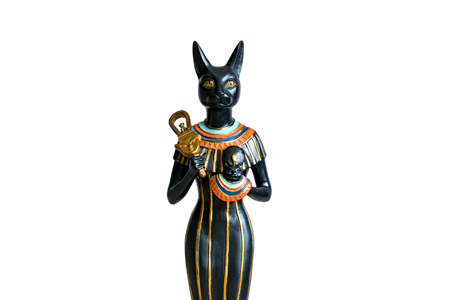
Out of that mutual convenience, affection evolved. The cat stepped into the human household, then into mythology (and finally into countless short form videos shared across social media).
In ancient Egypt, the cat’s grace and power found divine expression in Bastet. She began as a lioness goddess, a fierce protector of the pharaoh and bringer of the sun’s heat. Over centuries, as Egypt’s world grew more urban and domestic, her image softened. The lion became a sleek cat, her temple city Bubastis a sanctuary where thousands of cats were mummified in devotion.
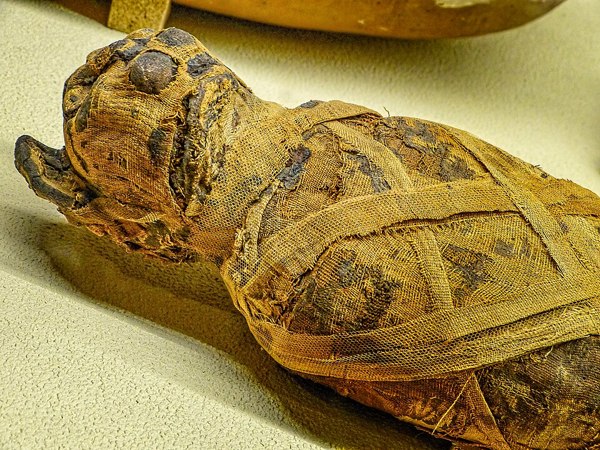
Cat mummy probably from Bubastis, Ptolemaic Period Egypt 2nd century BCE Penn Museum. Wikimedia Commons.
Bastet came to embody home, fertility, and joy — still a guardian, but now of households rather than battlefields.
In her transformation from lioness to cat lies the an arc of human-animal-grass entanglement: wildness tamed by the steady rhythms of grain, grass, and settlement.